



Close Menu
Knowledge Middle EastKnowledge Middle East

    Subscribe to Updates

    Get the latest news from Knowledge Middle East about education in UAE.

    Newsletter Subscribe

    * By clicking Subscribe, you agree to the our terms and our Privacy Policy agreement.

    What's Hot

    UAE Universities to Resume in-person Classes on April 20

    April 15, 2026

    UAE Schools to Resume in-person Classes on 20th April

    April 15, 2026

    UAE extends automatic degree recognition to 38 universities

    April 9, 2026
    Facebook X (Twitter) Instagram
    Facebook X (Twitter) Instagram LinkedIn
    Knowledge Middle EastKnowledge Middle East
    • Home
    • Features

      UAE Universities to Resume in-person Classes on April 20

      April 15, 2026

      UAE Schools to Resume in-person Classes on 20th April

      April 15, 2026

      UAE extends automatic degree recognition to 38 universities

      April 9, 2026

      IGCSE, A-level exams cancelled in UAE, Bahrain, Kuwait, Lebanon

      April 3, 2026

      UAE National Orchestra Celebrates Five Decades of Emirati Screen Music

      April 3, 2026
    • Education
      • Schools
      • Universities
    • Culture
      • Art
      • Literature
      • Music
      • Media
      • Museums
    • Tech
    • Opinions
    • Training
    • Industry
    • Jobs
      • Internships
      • Volunteers
    Knowledge Middle EastKnowledge Middle East
    Home»Culture»Literature»African musical storytelling, cultural exchanges with Arab authors enliven Sharjah LitFest
    Literature

    African musical storytelling, cultural exchanges with Arab authors enliven Sharjah LitFest

    KME StaffBy KME StaffJanuary 19, 2026Updated:January 19, 2026
    WhatsApp LinkedIn Facebook Twitter Email Copy Link
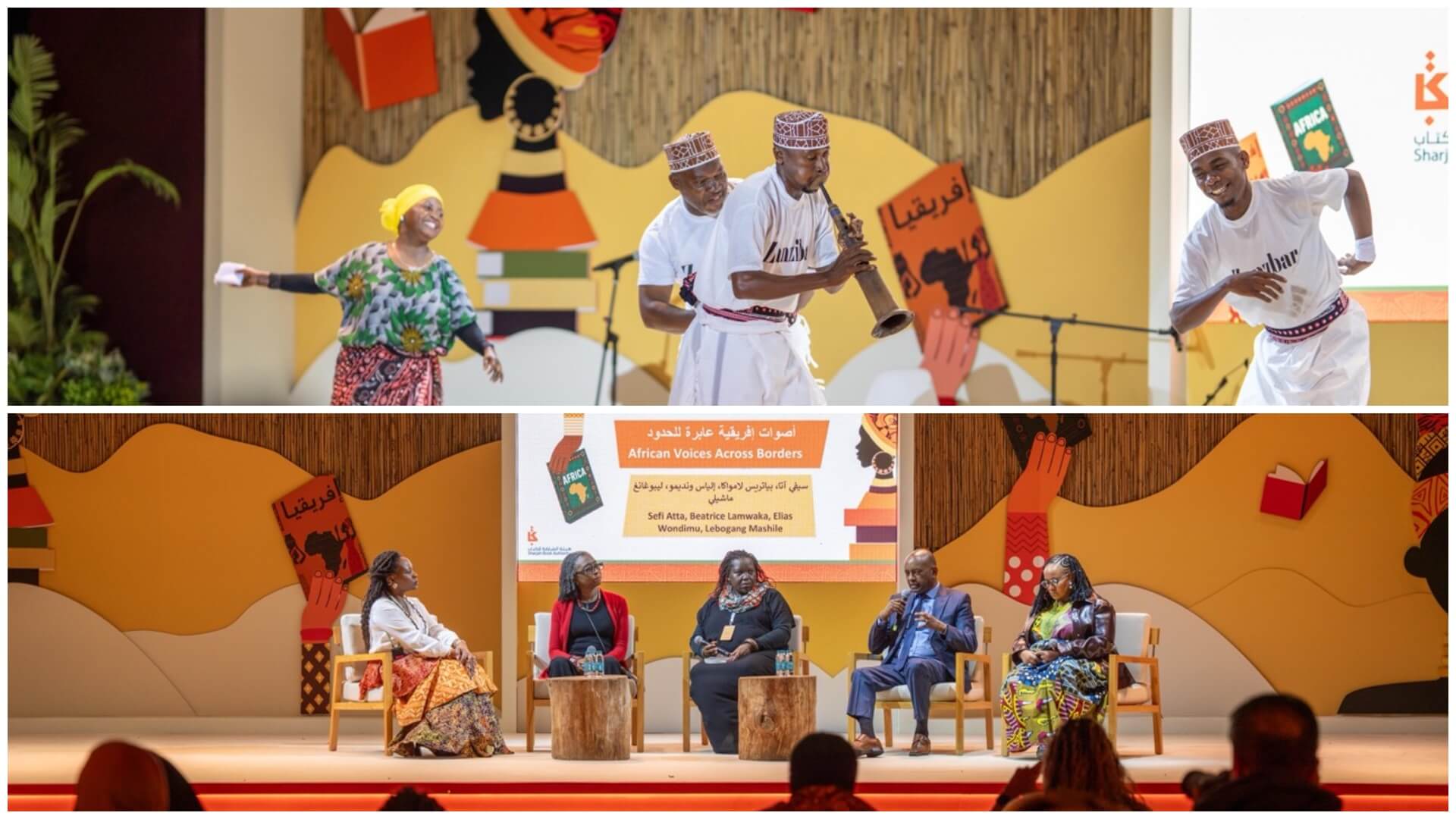
    SFAL 2026 02 JPG 1
    A special musical performance from the Dhow Academy (Above) Panel discussion “African Voices Across Borders” (Below) (Images Courtesy: Sharjah Book Authority)
    Share
    WhatsApp LinkedIn Facebook Twitter Email Copy Link

    Musical storytelling embodying the melodious spirit of Tanzania, and a performance highlighting ancient African traditions through poetry, music and chants enlivened the stage at the ongoing Sharjah Festival of African Literature (SFAL 2026). Cultural exchanges with Arab and Emirati authors also highlighted literature as a bridge between languages and identities.

    The vibrant musical act had coastal rhythms of Tanzania and showcased traditional instruments that reflected the diversity of Zanzibar’s musical heritage. The performance was presented by the Dhow Academy from Zanzibar, which is dedicated to safeguarding Zanzibar’s traditional music, including Kidumbak and Beni forms, and musical storytelling. The Academy also empowers the youth through education and live performances that blend African, Arab, and Indian influences.

    Banner Placeholder

    As part of the second day programme of the festival, which is organised by Sharjah Book Authority (SBA), the main stage also presented an oral storytelling performance titled “The Black Mona Lisa Series”, by South African artist MoAfrika Wa Mokgathi. The performance, blending poetry, music and chants, honours the ancient traditions exploring the role of women in preserving memory and lineage through the character of Rakgadi (the aunt). The performance was supported by cinematic visuals on screen linking African traditions such as the Kiba music and dance genre and the Malopo ritual paying tribute to ancestors.
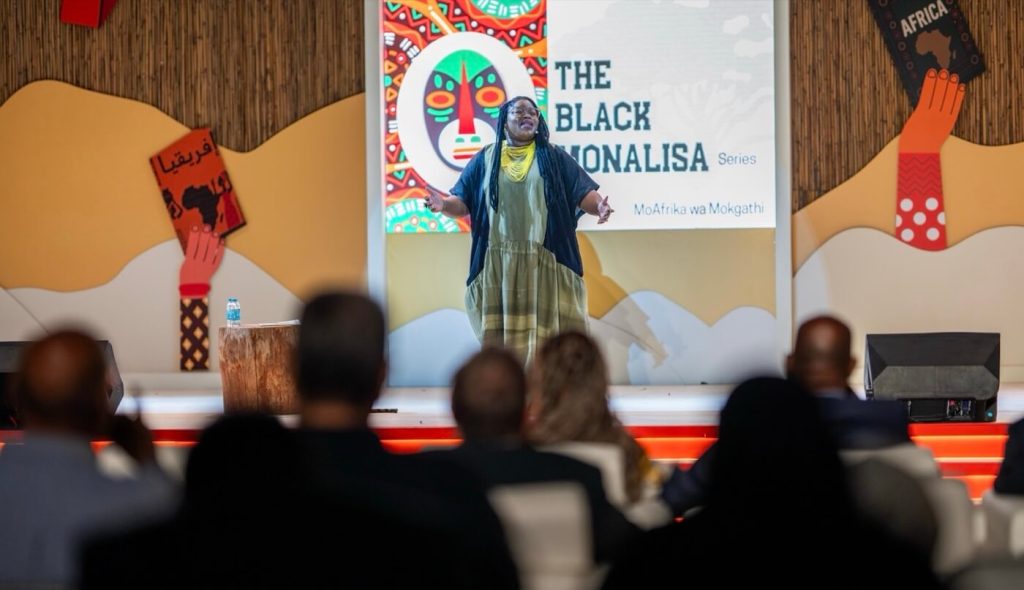
    Storytelling Performance MoAfrika wa Mokgathi The Black Mona Lisa series
    Storytelling Performance “MoAfrika wa Mokgathi The Black Mona Lisa series” (Image Courtesy: Sharjah Book Authority)

    Exploring African and Emirati narratives

    The Festival also saw panel discussions exploring literature as a bridge between cultures and underscoring the shared ground between storytelling traditions in the UAE and African countries.

    A session on “Shared Stories for Young Readers” – featuring Nahida Esmail, Richard Mabala, and Fatima Al Ameri, and moderated by Toyin Akanni – examined key features of children’s literature in Africa and the UAE as a product of oral traditions, folk tales, and community values.

    The panel explored how these narratives can reinforce identity while addressing universal themes such as curiosity, honesty, integrity, and belonging. Speakers also emphasised the role of children’s stories in cultivating empathy and cross-cultural understanding from an early age.
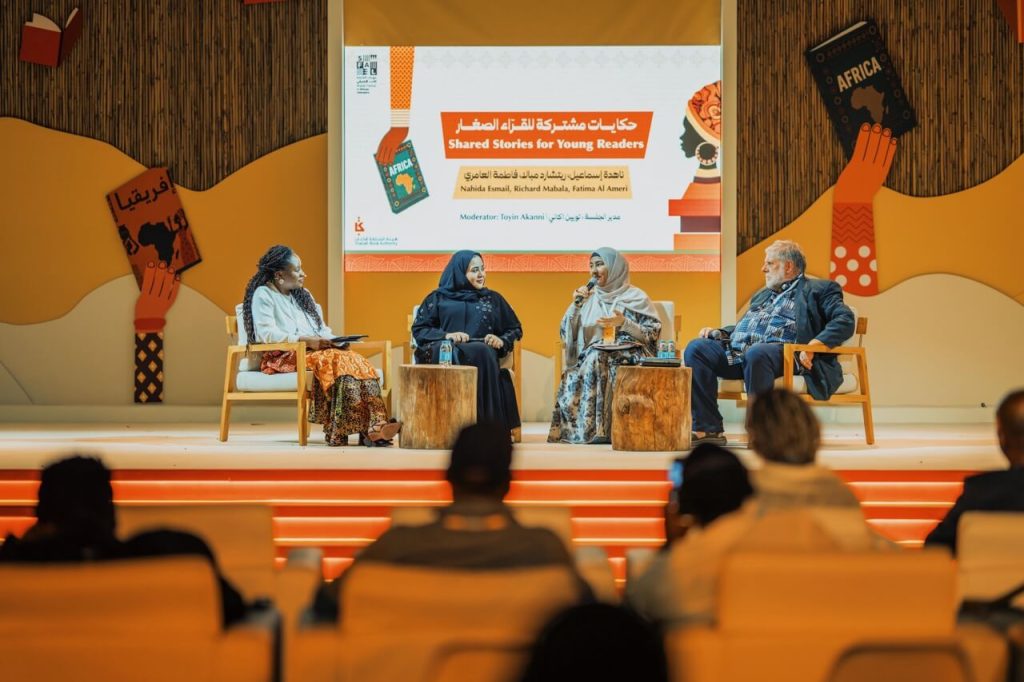
    Panel discussion Shared Stories for Young Readers
    Panel discussion “Shared Stories for Young Readers”  (Image Courtesy: Sharjah Book Authority)

    Weighing the impact of globalisation in shaping African economies, cultures, and social structures, a session titled “African Voices Across Borders” focused on the experiences of African migrants around the world. The session featured Sefi Atta, Beatrice Lamwaka, Lebogang Mashile, and Elias Wondimu, who offered diverse perspectives reflecting the breadth of African experiences from both within the continent and beyond.

    Through literature and personal narratives, speakers discussed questions of identity and belonging, as well as the opportunities and challenges facing Africans in an increasingly interconnected world.

    The impact of geography and environment on storytelling

    Leading African and Arab writers and intellectuals also explored how natural environments and geography have influenced African and Emirati storytelling traditions and narratives in a session titled “Sand, Sea, and Storytelling”.

    Moderated by Alya Al Mansouri, the panel featured Emirati novelist Ali Al Shaali and Zanzibar-based historian Dr.Saada Omar Wahab.

    Al Shaali said the rapid urbanization in the UAE is reflected in a number of his works, contrasting the village and city life in some of the portrayals. “We talk about each element of this transformation with pride. I have a holiday home in the eastern region and my relationship with nature has changed; I’m deeply appreciative of it,” he said.

    The UAE author pointed out that “we are all prisoners of time and place” and no literature can truly escape the context of where it was composed. “Nothing happens in a vacuum; the narrator or writer or voice from within has to pass through these elements of time and place.”
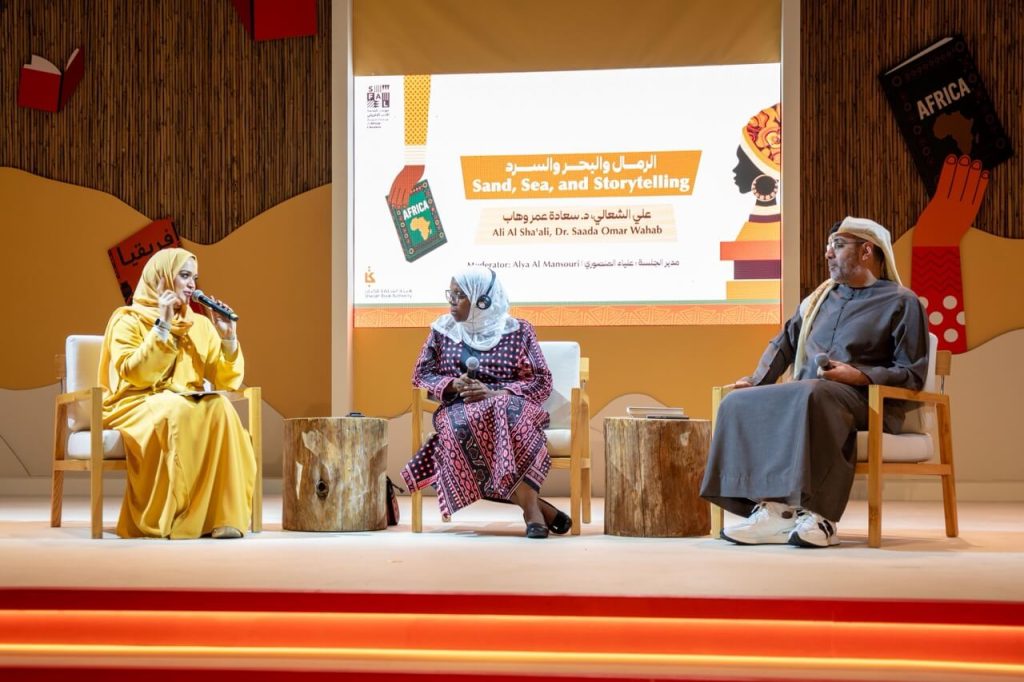
    Panel discussion on Sand Sea and Storytelling
    Panel discussion on “Sand, Sea, and Storytelling” (Image Courtesy: Sharjah Book Authority)

    Dr. Wahab alluded to a similar concept, saying Zanzibar’s location in the Indian Ocean near Africa brought people from various backgrounds – early African migrations, Arab traders, European settlers – in one place, creating a unique culture. She explained this confluence of heritages is the reason why Swahili oral storytelling traditions often feature “heroes of Africa” as well as “travellers from the Middle East”.

    Under the theme “The African Way”, SFAL 2026 is being held from January 14 to 18 at University City Hall Square, Sharjah. Featuring thought-provoking discussions, immersive workshops, colourful folk performances and cuisines from various regions of Africa, the festival aims at strengthening cultural exchange between Africa and the Arab World.

    Culture Featured Literature SFAL2026 Sharjah Sharjah Book Authority Sharjah Festival of African Literature UAE
    Share. WhatsApp LinkedIn Facebook Twitter Email Copy Link
    KME Staff
    • Website

    Related Posts

    UAE Universities to Resume in-person Classes on April 20

    April 15, 2026

    UAE Schools to Resume in-person Classes on 20th April

    April 15, 2026

    UAE extends automatic degree recognition to 38 universities

    April 9, 2026
    Leave A Reply Cancel Reply

    Placeholder Ad Banner

    Subscribe to Updates

    Get the latest news from Knowledge Middle East about education in UAE.

    Newsletter Subscribe

    * By clicking Subscribe, you agree to the our terms and our Privacy Policy agreement.

    Top Posts

    Studying Abroad: Tighter Visa Regulations, Emotional Readiness Key Factors

    January 23, 2026

    UAE’s early investments positioned it as global AI hub for computing capabilities: Al Olama

    February 20, 2026

    77 next-gen pilots graduate from Emirates Flight Training Academy

    January 4, 2026

    Learning Without Pause: Why UAE Higher Education Is Built To Adapt

    March 25, 2026
    Stay In Touch
    • Facebook
    • Twitter
    • Instagram
    • LinkedIn
    About Us
    About Us

    Knowledge Middle East is a platform that brings together knowledge trends, updates and events across diverse sectors and fields in the region. Knowledge formally manifests in educational institutions like schools and universities but knowledge-sharing is a continuous process that unfolds in museums, libraries, at book fairs, conferences, and art exhibitions.
    Cultures are repositories of shared knowledge and every cultural space and event sees knowledge being enjoyed and its aesthetics shared. Join us and be part of the knowledge sharing journey.

    Email Us: contact@knowledgemiddleeast.com

    Facebook X (Twitter) Instagram LinkedIn
    Get in Touch
    • About Us
    • Contact Us
    • Jobs
    • KME – Media Services
    • Our Authors
    • Privacy Policy
    • Terms and Conditions
    • UAE Scholarships 2026
    Most Popular

    As Exams Halls Fall Silent, Know you will Emerge Stronger (An Open Letter to Students)

    March 16, 2026

    AI Readiness Tool Launched at World Governments Summit 2026

    February 5, 2026
    © 2026 Knowledge Middle East. Designed by Knowledge Middle East Team.
    • Home
    • Schools
    • Universities
    • Opinions
    • Sitemap

    Type above and press Enter to search. Press Esc to cancel.