




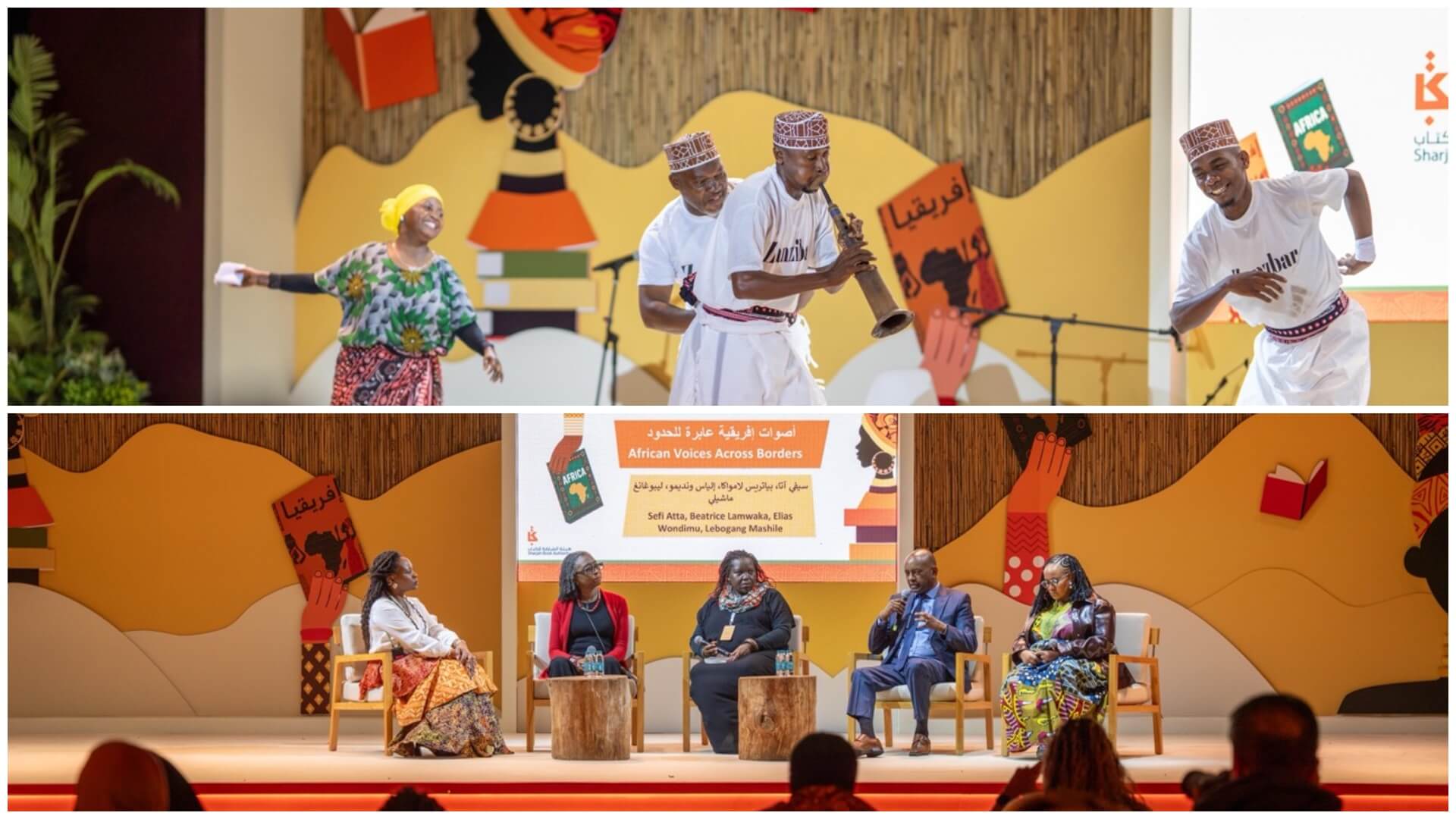
Musical storytelling embodying the melodious spirit of Tanzania, and a performance highlighting ancient African traditions through poetry, music and chants enlivened the stage at the ongoing Sharjah Festival of African Literature (SFAL 2026). Cultural exchanges with Arab and Emirati authors also highlighted literature as a bridge between languages and identities.
The vibrant musical act had coastal rhythms of Tanzania and showcased traditional instruments that reflected the diversity of Zanzibar’s musical heritage. The performance was presented by the Dhow Academy from Zanzibar, which is dedicated to safeguarding Zanzibar’s traditional music, including Kidumbak and Beni forms, and musical storytelling. The Academy also empowers the youth through education and live performances that blend African, Arab, and Indian influences.

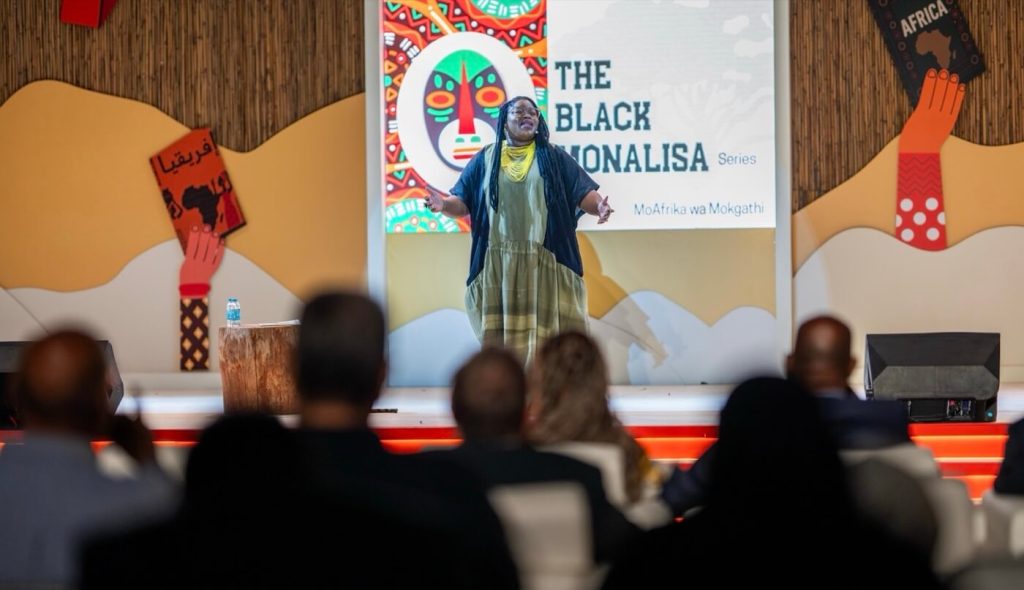
As part of the second day programme of the festival, which is organised by Sharjah Book Authority (SBA), the main stage also presented an oral storytelling performance titled “The Black Mona Lisa Series”, by South African artist MoAfrika Wa Mokgathi. The performance, blending poetry, music and chants, honours the ancient traditions exploring the role of women in preserving memory and lineage through the character of Rakgadi (the aunt). The performance was supported by cinematic visuals on screen linking African traditions such as the Kiba music and dance genre and the Malopo ritual paying tribute to ancestors.
Exploring African and Emirati narratives
The Festival also saw panel discussions exploring literature as a bridge between cultures and underscoring the shared ground between storytelling traditions in the UAE and African countries.
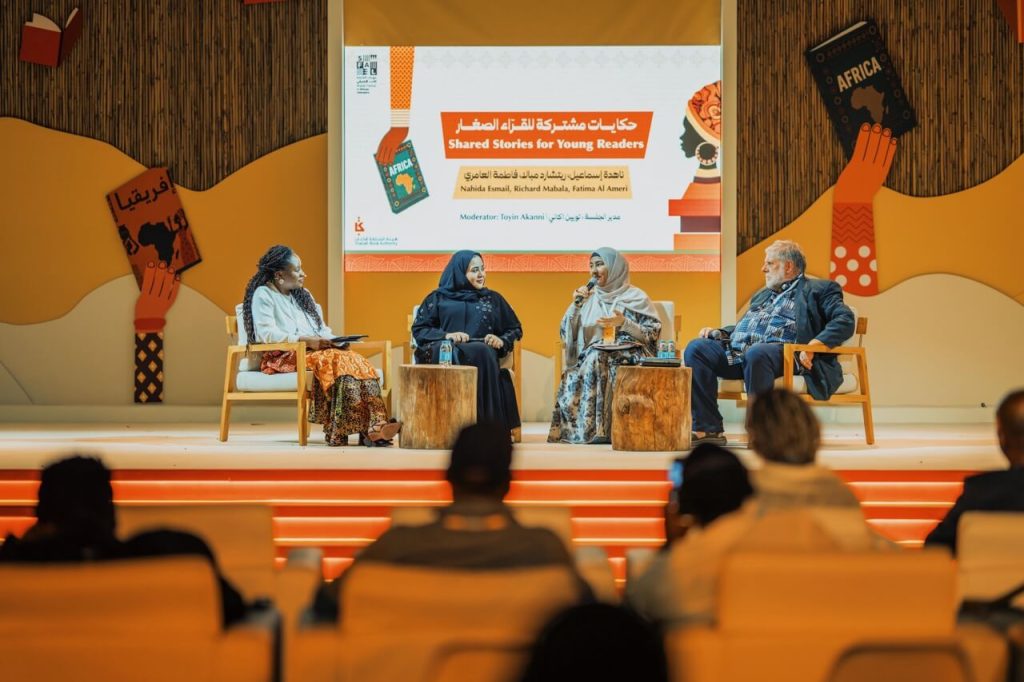
A session on “Shared Stories for Young Readers” – featuring Nahida Esmail, Richard Mabala, and Fatima Al Ameri, and moderated by Toyin Akanni – examined key features of children’s literature in Africa and the UAE as a product of oral traditions, folk tales, and community values.
The panel explored how these narratives can reinforce identity while addressing universal themes such as curiosity, honesty, integrity, and belonging. Speakers also emphasised the role of children’s stories in cultivating empathy and cross-cultural understanding from an early age.
Weighing the impact of globalisation in shaping African economies, cultures, and social structures, a session titled “African Voices Across Borders” focused on the experiences of African migrants around the world. The session featured Sefi Atta, Beatrice Lamwaka, Lebogang Mashile, and Elias Wondimu, who offered diverse perspectives reflecting the breadth of African experiences from both within the continent and beyond.
Through literature and personal narratives, speakers discussed questions of identity and belonging, as well as the opportunities and challenges facing Africans in an increasingly interconnected world.
The impact of geography and environment on storytelling
Leading African and Arab writers and intellectuals also explored how natural environments and geography have influenced African and Emirati storytelling traditions and narratives in a session titled “Sand, Sea, and Storytelling”.
Moderated by Alya Al Mansouri, the panel featured Emirati novelist Ali Al Shaali and Zanzibar-based historian Dr.Saada Omar Wahab.
Al Shaali said the rapid urbanization in the UAE is reflected in a number of his works, contrasting the village and city life in some of the portrayals. “We talk about each element of this transformation with pride. I have a holiday home in the eastern region and my relationship with nature has changed; I’m deeply appreciative of it,” he said.
The UAE author pointed out that “we are all prisoners of time and place” and no literature can truly escape the context of where it was composed. “Nothing happens in a vacuum; the narrator or writer or voice from within has to pass through these elements of time and place.”
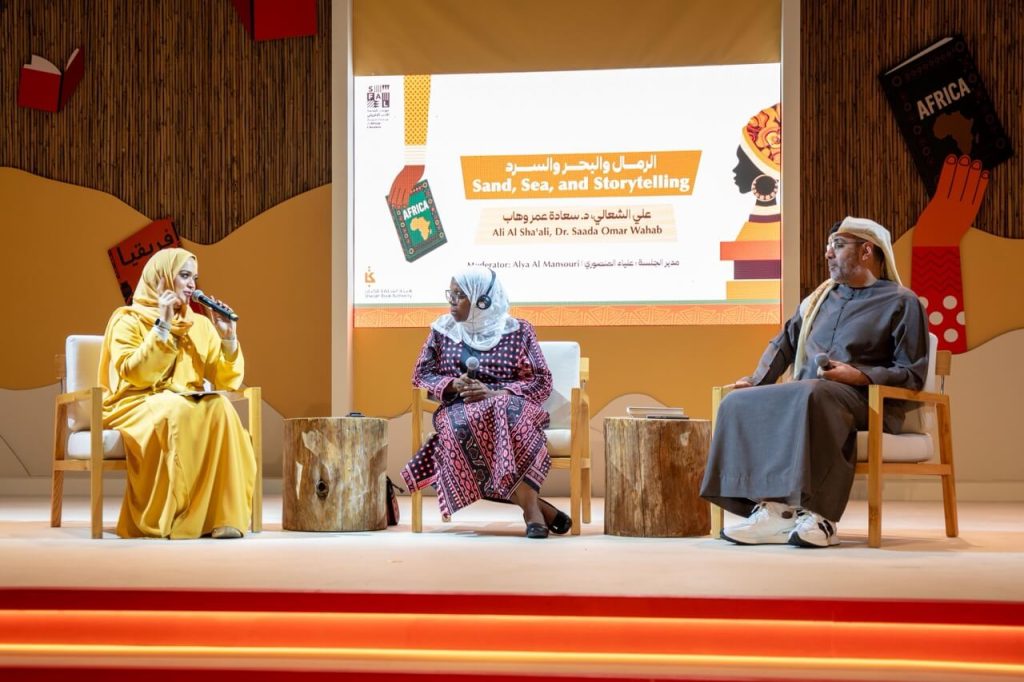
Dr. Wahab alluded to a similar concept, saying Zanzibar’s location in the Indian Ocean near Africa brought people from various backgrounds – early African migrations, Arab traders, European settlers – in one place, creating a unique culture. She explained this confluence of heritages is the reason why Swahili oral storytelling traditions often feature “heroes of Africa” as well as “travellers from the Middle East”.
Under the theme “The African Way”, SFAL 2026 is being held from January 14 to 18 at University City Hall Square, Sharjah. Featuring thought-provoking discussions, immersive workshops, colourful folk performances and cuisines from various regions of Africa, the festival aims at strengthening cultural exchange between Africa and the Arab World.
