




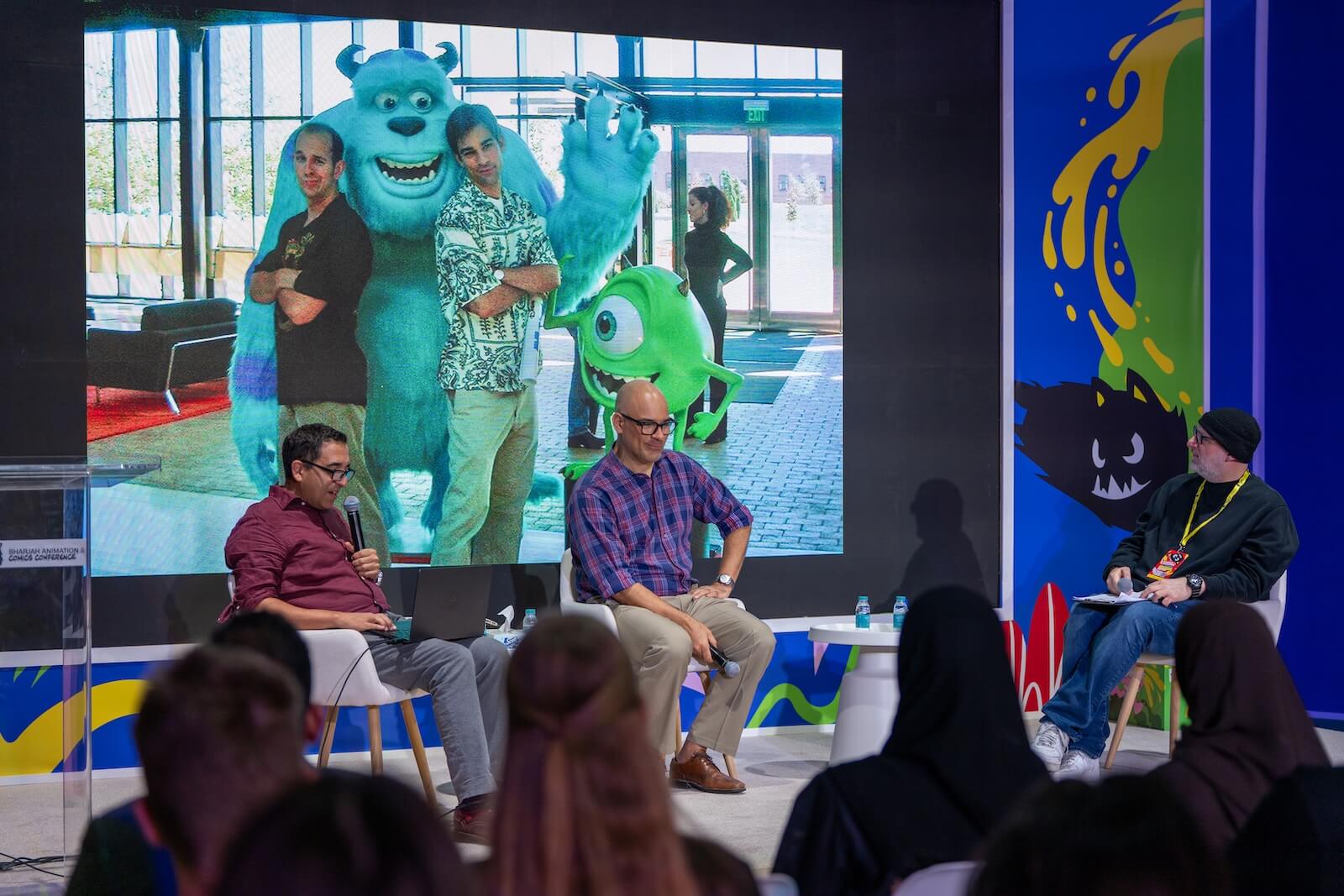
When a manager at Pixar ordered animator Andrew Gordon to dismantle a secret room he had built inside an office air vent, the argument ended with three words – “Well, Steve likes it.”
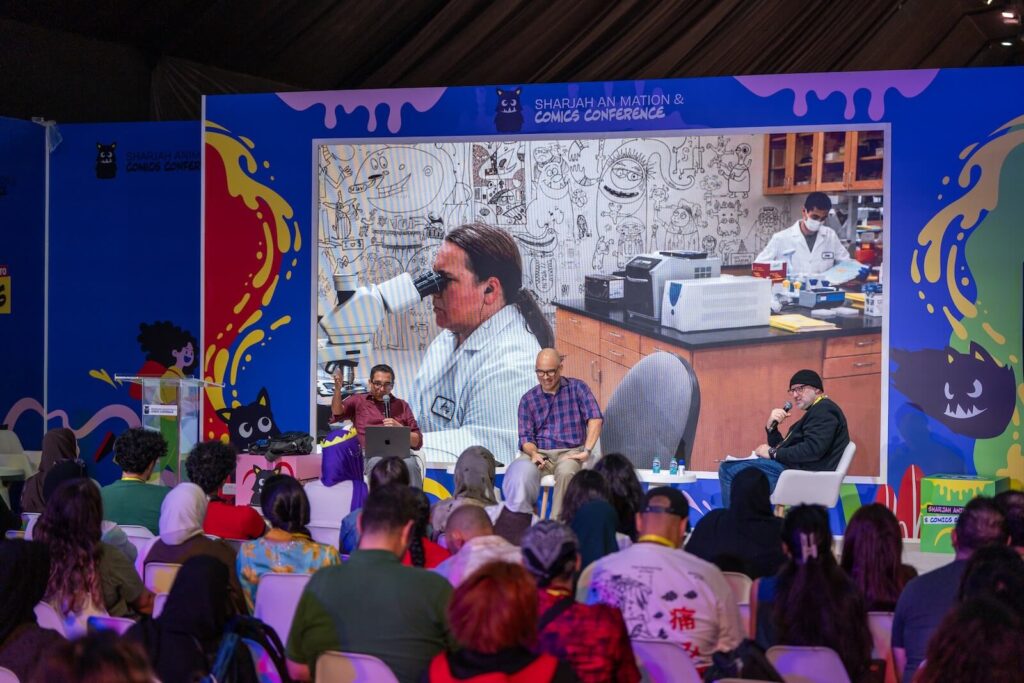
Gordon shared the above story at the Sharjah Animation and Comics Conference (SACC) 2026, where he and fellow Pixar veteran Doug Sweetland took a packed hall of young creators behind the scenes of the studio during the candid panel Inside Pixar Creative Culture, moderated by Hassane Dennaoui (Big Hass).

The “Steve” was Steve Jobs, who acquired Lucasfilm’s computer graphics division in 1986 and became Pixar’s majority shareholder and chief executive. He had an office in the building and became one of the secret room’s regular visitors. Gordon said that kind of backing from the very top gave the studio’s young artists the freedom to take the risks that made its films great.
“Almost like your dad is the boss”
Through some rare behind-the-scenes photos of Pixar’s earliest days when both Gordon and Sweetland were in their early twenties, the pair described an animation department full of decorated cubicles, a second-hand velour couch and costume contests.
“Because we had protection from the leadership, we could be very brash and brave and mess things up, with no fear of getting into trouble. It was almost like your dad is the boss,” Gordon said, adding that John Lasseter, the Chief Creative Officer, and Jobs both understood that “fun will get on the screen”
Importance of Daily Reviews
Both said Pixar’s daily reviews were central to its success. Animators showed unfinished work to their peers and directors and received blunt feedback.
“It’s not about dressing a person down. It’s about putting your ego aside and engaging in a conversation about how to make your work better,” said Sweetland, who started at Pixar aged 19 before working on ‘Toy Story’, ‘Monsters, Inc.’ and ‘The Incredibles’, and directing the Oscar-nominated short ‘Presto’.
Gordon noted that the reviews also bred healthy rivalry. “You’re only as good as your last shot,” he said.
Pitch, Watch and Take Note
On knowing when to let an idea go, Sweetland said several Pixar films hit a crisis point. Directors who could not abandon an idea were often replaced. “You have to pitch constantly and watch for the moment the light dies in the person’s eyes,” said Sweetland, who joined Pixar in 1994 after graduating from the California Institute of the Arts (CalArts).
“It’s exactly like stand-up. If they don’t laugh, get back to work. Take the note.”
Sweetland said the biggest surprise of working on ‘Toy Story’ was how little anyone talked about movement. “The conversation was always about what’s real,” he said. “You had to have film literacy. You’re not just a motion jockey, you’re an actor. If you can get something that hits you here in that scene, presumably, it’s going to hit everybody.”
Their advice to smaller studios was to put the right people together, set high standards and give artists freedom. “There can be a Pixar anywhere,” Gordon said. “You just have to put together the right collection of people that make magic.”
