


Close Menu
Knowledge Middle EastKnowledge Middle East

    Subscribe to Updates

    Get the latest news from Knowledge Middle East about education in UAE.

    Newsletter Subscribe

    * By clicking Subscribe, you agree to the our terms and our Privacy Policy agreement.

    What's Hot

    UAE extends automatic degree recognition to 38 universities

    April 9, 2026

    IGCSE, A-level exams cancelled in UAE, Bahrain, Kuwait, Lebanon

    April 3, 2026

    UAE National Orchestra Celebrates Five Decades of Emirati Screen Music

    April 3, 2026
    Facebook X (Twitter) Instagram
    Facebook X (Twitter) Instagram LinkedIn
    Knowledge Middle EastKnowledge Middle East
    • Home
    • Features

      UAE extends automatic degree recognition to 38 universities

      April 9, 2026

      IGCSE, A-level exams cancelled in UAE, Bahrain, Kuwait, Lebanon

      April 3, 2026

      UAE National Orchestra Celebrates Five Decades of Emirati Screen Music

      April 3, 2026

      UAE Extends Remote Learning For Schools

      March 31, 2026

      CBSE Announces Alternative Assessment Scheme for Class 12 in Middle East

      March 27, 2026
    • Education
      • Schools
      • Universities
    • Culture
      • Art
      • Literature
      • Music
      • Media
      • Museums
    • Tech
    • Opinions
    • Training
    • Industry
    • Jobs
      • Internships
      • Volunteers
    Knowledge Middle EastKnowledge Middle East
    Home»Industry»Creative Economy Key Driver of Growth, Soft Power: New Report at WGS 2026
    Industry

    Creative Economy Key Driver of Growth, Soft Power: New Report at WGS 2026

    KME StaffBy KME StaffFebruary 5, 2026
    WhatsApp LinkedIn Facebook Twitter Email Copy Link
    FTI WSG Report 2026 1
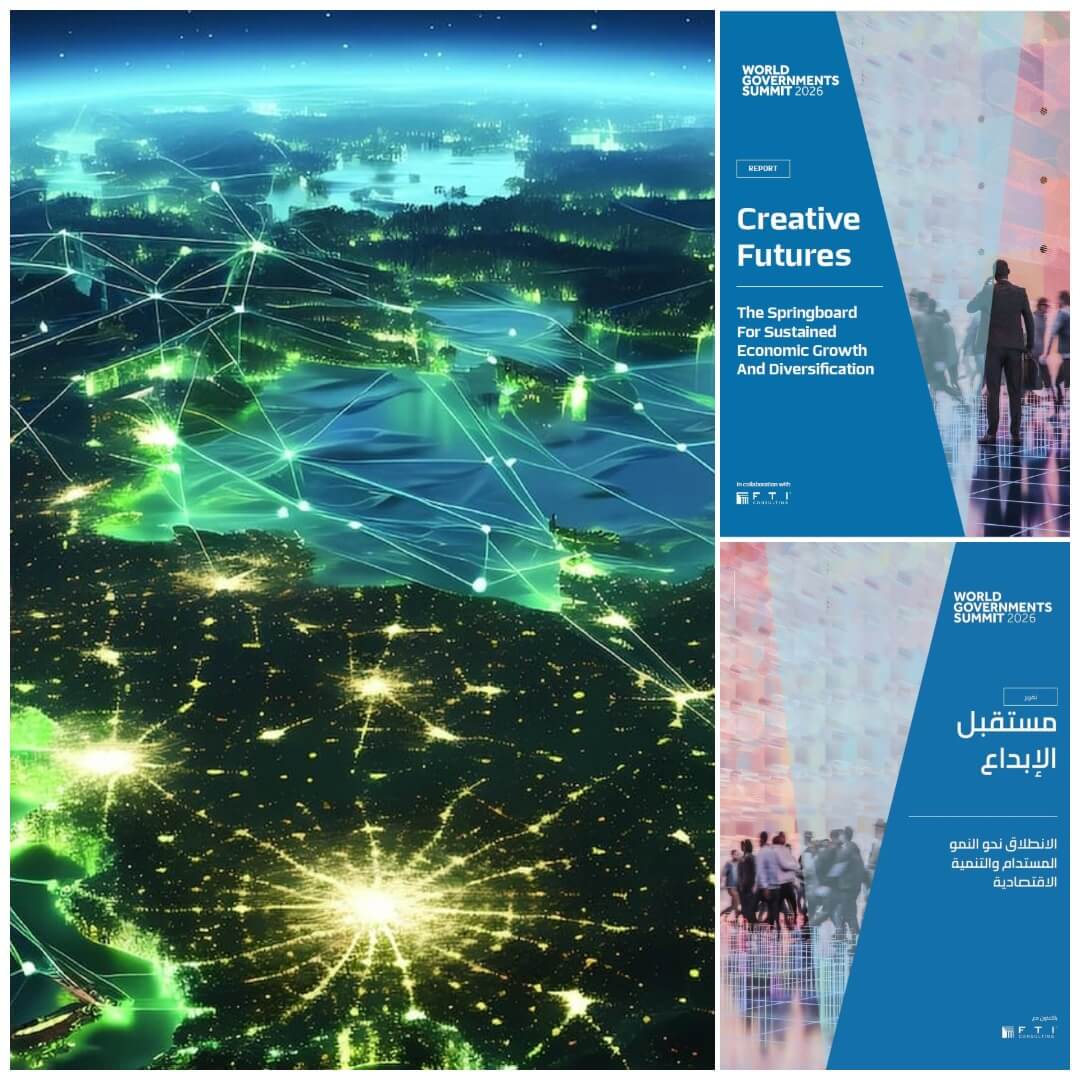
    Report - Creative Futures: The Springboard for Sustained Economic Growth and Diversification (Images Courtesy: WSG
    Share
    WhatsApp LinkedIn Facebook Twitter Email Copy Link

    Once considered niche sectors, cultural and creative industries are now recognised as essential engines for sustainable growth, talent development and soft power, according to a new industry report launched at the ongoing World Governments Summit (WGS 2026).

    The new joint report titled ‘Creative Futures: The Springboard for Sustained Economic Growth and Diversification’, launched by FTI Consulting in partnership with WGS, offers governments and public sector leaders a strategic roadmap for harnessing the creative economy as a driver of national prosperity, innovation and global influence.

    Banner Placeholder

    The report revealed a paradigm shift: cultural and creative industries (spanning film, music, performing arts, publishing, design, gaming, architecture and digital content creation) are no longer peripheral to economic planning. They are now recognised as key drivers for sustainable growth, and soft power, according to a press statement.

    The report highlights the significant size of the global creative economy (~ $2.25 trillion in 2020), accounting for 3.1% of global GDP and employing nearly 6.2% of the global employment. Moreover, it highlights that every $1 invested in creative industries generates approximately $2.50 in overall economic output, reflecting extensive spillover benefits across tourism, manufacturing and urban services.

    “This report demonstrates that creativity is not just an asset for culture, it is a cornerstone of national economic strategy,” said Antoine Nasr, Senior Managing Director and Head of FTI Consulting Middle East.
    “By integrating governance, financing, talent development and global engagement, governments can unlock transformative value from the creative economy, driving innovation, job creation and international influence.”

    Key insights from the report

    • Whole-of-Government Governance for Cultural Power: Coordinated, cross-ministerial governance structures, supported by dedicated units, enable governments to transform creative potential into measurable economic impact.
    • Innovative Financing for the Creative Economy: New funding mechanisms, including blended finance, guarantees and dedicated creative funds, can overcome traditional capital barriers for creative enterprises.
    • Building the Future Workforce: Embedding creativity, entrepreneurship and adaptive skills into education systems ensures a talent pipeline capable of sustaining the digital creative economy.
    • Expanding Creative Exports and Global Influence: Creative industries serve as vital instruments of soft power, enabling nations to strengthen cultural diplomacy, global visibility and economic competitiveness.

    The report concluded that the creative economy represents a generational opportunity. Countries that act decisively today will shape global cultural industries for decades, while those that delay, risk being relegated to consumers rather than producers and importers rather than exporters.

    Creative Futures: The Springboard for Sustained Economic Growth and Diversification is available for download here in English and Arabic:

    English: https://www.worldgovernmentssummit.org/observer/reports/detail/creative-futures-the-springboard-for-sustained-economic-growth-and-diversification

    Arabic: https://www.worldgovernmentssummit.org/ar/observer/reports/detail/creative-futures-the-springboard-for-sustained-economic-growth-and-diversification

    Creative economy Dubai Featured FTI Consulting Global Influence Industry soft power UAE WGS 2026 World Governments Summit
    Share. WhatsApp LinkedIn Facebook Twitter Email Copy Link
    KME Staff
    • Website

    Related Posts

    UAE extends automatic degree recognition to 38 universities

    April 9, 2026

    IGCSE, A-level exams cancelled in UAE, Bahrain, Kuwait, Lebanon

    April 3, 2026

    UAE National Orchestra Celebrates Five Decades of Emirati Screen Music

    April 3, 2026
    Leave A Reply Cancel Reply

    Placeholder Ad Banner

    Subscribe to Updates

    Get the latest news from Knowledge Middle East about education in UAE.

    Newsletter Subscribe

    * By clicking Subscribe, you agree to the our terms and our Privacy Policy agreement.

    Top Posts

    Studying Abroad: Tighter Visa Regulations, Emotional Readiness Key Factors

    January 23, 2026

    UAE’s early investments positioned it as global AI hub for computing capabilities: Al Olama

    February 20, 2026

    77 next-gen pilots graduate from Emirates Flight Training Academy

    January 4, 2026

    Learning Without Pause: Why UAE Higher Education Is Built To Adapt

    March 25, 2026
    Stay In Touch
    • Facebook
    • Twitter
    • Instagram
    • LinkedIn
    About Us
    About Us

    Knowledge Middle East is a platform that brings together knowledge trends, updates and events across diverse sectors and fields in the region. Knowledge formally manifests in educational institutions like schools and universities but knowledge-sharing is a continuous process that unfolds in museums, libraries, at book fairs, conferences, and art exhibitions.
    Cultures are repositories of shared knowledge and every cultural space and event sees knowledge being enjoyed and its aesthetics shared. Join us and be part of the knowledge sharing journey.

    Email Us: contact@knowledgemiddleeast.com

    Facebook X (Twitter) Instagram LinkedIn
    Get in Touch
    • About Us
    • Contact Us
    • Jobs
    • KME – Media Services
    • Our Authors
    • Privacy Policy
    • Terms and Conditions
    • UAE Scholarships 2026
    Most Popular

    As Exams Halls Fall Silent, Know you will Emerge Stronger (An Open Letter to Students)

    March 16, 2026

    AI Readiness Tool Launched at World Governments Summit 2026

    February 5, 2026
    © 2026 Knowledge Middle East. Designed by Knowledge Middle East Team.
    • Home
    • Schools
    • Universities
    • Opinions
    • Sitemap

    Type above and press Enter to search. Press Esc to cancel.