




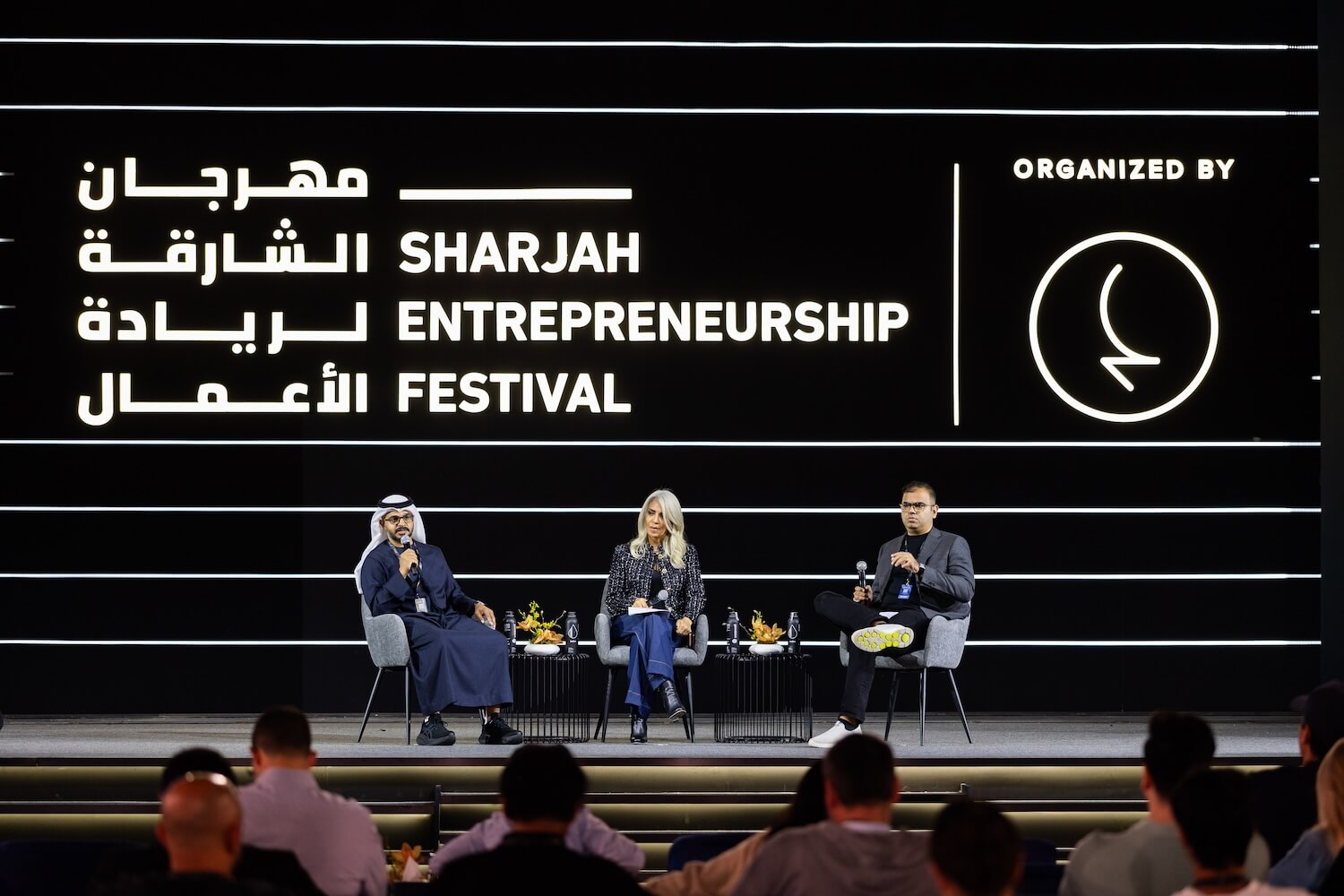
Culture, data discipline, AI readiness and policy alignment are emerging as decisive factors in how Middle East technology companies scale globally, industry leaders said during the 9th annual Sharjah Entrepreneurship Festival (SEF) 2026.
Moderated by Shaden Khallaf, Senior Regional Director for Public Policy, Government Affairs, and Social Impact at Careem, the discussion on the second day of SEF titled ‘Scaling Tech Champions in the Middle East”, brought together Aaqib Gadit, Co-Founder of Disrupt, and Hamad Alkhayyal Alharthi, Vice President of Information Technology at Emarat, according to a press statement.

Khallaf opened the conversation by observing that the Middle East’s technology ambitions have fundamentally shifted. The region, she said, is focused on building companies capable of competing internationally. “The ambition here is no longer just scaling start-ups, but scaling sovereign champions,” she noted.
Asked what separates start-ups that successfully scale from those that stall, Gadit pointed to culture as the defining differentiator. While large corporations benefit from capital, talent, data, and network effects, he said start-ups rely on speed and mindset.
“Big companies have everything: talent, money, data, network effects, and power. But start-ups have culture and speed,” Gadit said, adding that maintaining a founder mindset at scale remains one of the toughest challenges.
Founders, he argued, must sustain what he described as “irrational self-belief”, question assumptions, move quickly, and create environments where teams feel safe to experiment and fail.
Alharthi highlighted a different challenge facing regional companies with global ambitions: the UAE’s own digital maturity. While a competitive advantage locally, he cautioned it can become a blind spot internationally.
“We’re spoiled here thanks to the strong infrastructure, a digital government, and smooth connections. We think that everyone else is driving on the same digital highway as us, but that’s not the case,” he said.
A truly global product, Alharthi added, must be designed for imperfection. “If your product only works when Wi-Fi is perfect, you’re not making a global product; you’re making a local one. Systems need to be built with resilience, not just sophistication.”
The discussion also examined how scaling beyond the region requires a shift from relationship-driven business models to data-led decision-making.
“In the UAE, we have the ‘Majlis culture’, where your handshake and reputation are important. But internationally, it’s dashboards that are trusted. They trust data,” Alharthi said.
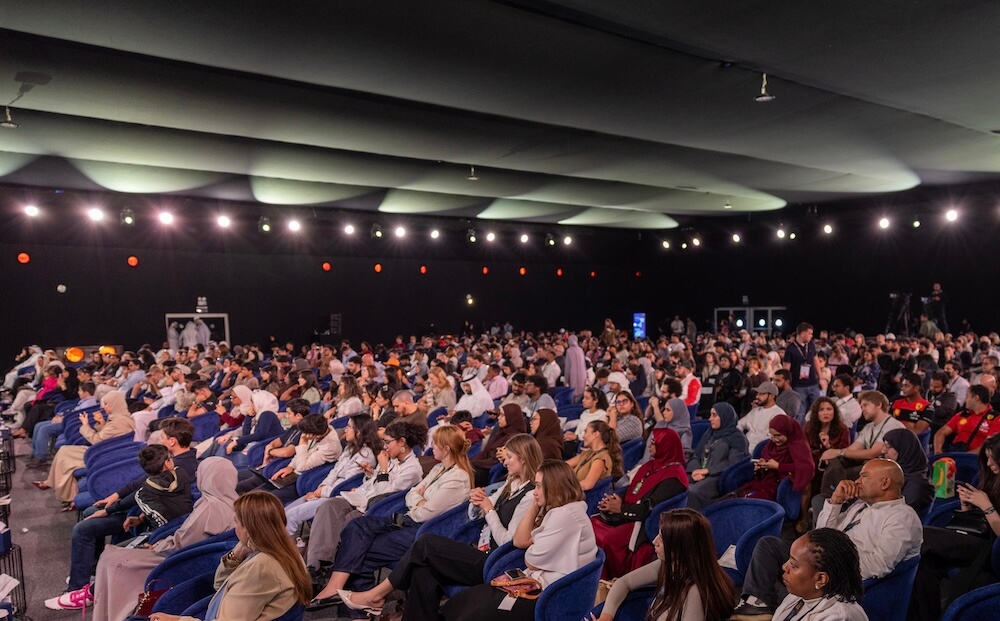
Talent, AI, Jobs and Policy
When the conversation turned to artificial intelligence (AI) and talent, both speakers rejected the narrative that AI would replace jobs. Instead, they framed it as a tool that elevates human capability.
“AI’s purpose is not to replace people. It’s to lift them up,” Alharthi said, noting that most AI challenges are organizational rather than technical. “Eighty percent of AI is about business, not technology. The company needs to change the way people think. IT alone cannot.”
Both speakers also emphasized the importance of policy in enabling innovation. While regulation often lags technology in many markets, they argued that the UAE frequently sets direction early.
Gadit said the country’s clarity around Web3 and fintech regulation gave Disrupt the confidence to deepen its investment, culminating in the launch of what he described as “the region’s first AI-native, on-chain, Sharia-compliant investment platform”.
Alharthi described policy as an enabler rather than a constraint. “We’re trying to catch up to what the government in the UAE already sees in the future,” he said.
“Compared to places where approvals take months, this flexibility gives you a huge edge over your competitors. Here, the government doesn’t wait for technology to get better. They work closely with businesses to set the rules early on,” he added.
Looking ahead, Gadit identified opportunities at the intersection of global demand and regional strengths, including AI and robotics infrastructure, energy, tokenization and blockchain, and cybersecurity. He pointed to energy as a particularly significant opportunity, suggesting that “the next trillion-dollar company from the Middle East could be an energy company”, given the scale of global demand.
Data, however, remained the foundation of all growth. “None of this works without clean, accurate data,” Alharthi said. “Fix your data now before other people get ahead of you.”
The session concluded with a shared view that tools alone will not determine success. Culture, people, and adaptability will. “It’s not the tools,” Alharthi said. “People will be the ones who make things happen. Hire people who are curious and have good instincts.”
Gadit echoed the sentiment, emphasizing organizational mindset over prediction. “You can’t know what will happen in the future,” he said. “But you can create an organization that is fearless, restless, and selfless, and one that can drive change.”
