




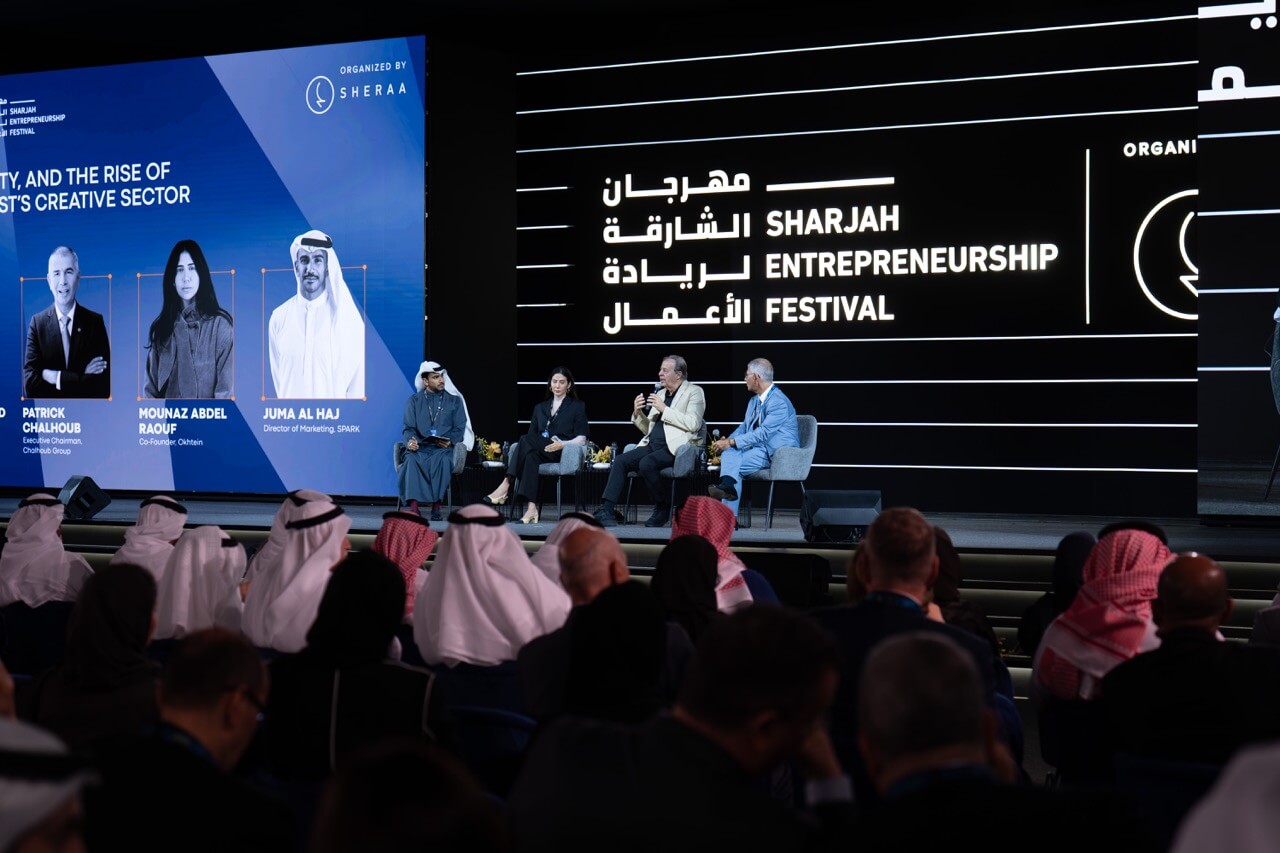
The ninth edition of the Sharjah Entrepreneurship Festival (SEF 2026), which was held over the weekend, drew several prominent founders, investors, policymakers, and business leaders from the UAE and abroad who shared their insights and expertise. Designed to link ideas with implementation, the festival focused on long-term economic development, institutional leadership, food security, AI, rise of regional brands and the role of entrepreneurship in supporting resilient economies.
Organised by the Sharjah Entrepreneurship Center (Sheraa) under the theme ‘Where We Belong’, the opening ceremony was held in the presence of Her Highness Sheikha Bodour bint Sultan Al Qasimi, Chairperson of Sheraa, at the Sharjah Research Technology and Innovation Park (SPARK).

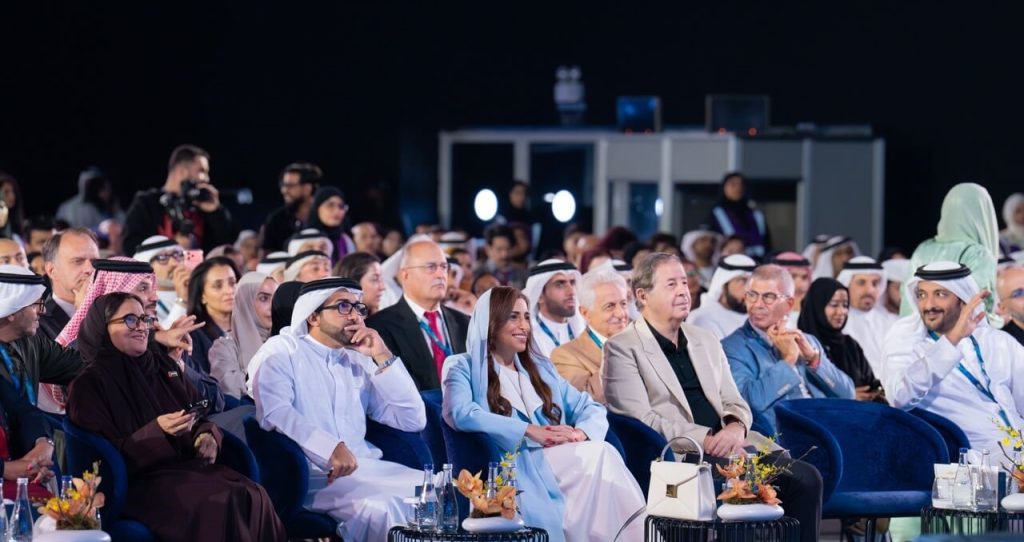
H.E. Sara Abdelaziz Al Nuaimi, CEO of Sheraa, noted how “every entrepreneurial journey begins with a decision to take the first step, but what defines founders is the choice to continue, often without certainty and away from the spotlight”.
She added: “Entrepreneurship is rarely linear. It is shaped by pressure, unanswered questions, and moments when progress feels slower than expected. This festival exists because building something meaningful requires more than ambition. It requires courage, resilience, and spaces where honest conversations about the full journey can take place.”
The CEO emphasised that Sheraa’s goal is to build Sharjah “as a start-up city in experience not just in name, by investing in people, developing human potential, and nurturing a generation of founders capable of creating real solutions for real-world challenges”.
“At Sheraa, we believe ideas become meaningful only when they are met with sustained support and long-term commitment. When founders choose to build in Sharjah, our responsibility does not end at the starting point. We continue to guide and support them as they grow, adapt, and make decisions over time.”
In her keynote speech, H.E Najla Ahmed Al Midfa, Vice Chairperson of Sheraa, highlighted that “more than 17,000 SMEs serve the city, a testament to seeds sown decades ago, when the emirate nurtured institutions, welcomed enterprise, and allowed ventures to take root and thrive”.
She added that many early initiatives have since grown into some of the region’s and the world’s most prominent names. “Take SIBF, now the largest book fair globally, or National Paints, a third-generation family business that has become one of the region’s leading paint companies.”
The UAE’s vision for the future of food security
Day One saw an important session titled ‘Building the Future Food Economy’, which focused on food security as an economic priority. In conversation with Sheikh Fahim bin Sultan Al Qasimi, Chairman of the Department of Government Relations, the session included H.E. Abdulla bin Touq Al Marri, Minister of Economy & Tourism and H.E. Dr. Amna Al Dahak, Minister of Climate Change & Environment.
The discussion examined how climate pressures, technological change, and global supply chain shifts are influencing food systems, investment approaches, and long-term economic stability.
During the session, H.E. Abdulla bin Touq Al Marri affirmed that the food sector has today become one of the strategic pillars of the new global economy, in light of rapid transformations driven by climate change, supply chain challenges, and technological advancement. He noted that the food economy is now a key engine of economic growth, with the value of global food markets and related activities exceeding USD 9 trillion, while international estimates indicate that global demand for food could increase by 50% to 60%
by 2050.
He further explained that, guided by the vision of its wise leadership and its commitment to building a competitive, knowledge-based, and sustainable economy, the UAE has positioned food as a priority strategic sector that serves as a driver of innovation, growth, and economic diversification. Accordingly, it was selected as the first sector under the National Policy for Economic Clusters. The UAE has made significant progress in developing the food economic cluster as a key pathway of the new economy—supporting food security, generating employment opportunities, enhancing sustainability, empowering SMEs operating in this vital sector, and leveraging advanced technologies in smart agriculture, digital supply chains, and logistics services.
H.E. Dr. Amna Al Dhahak, UAE Minister of Climate Change and the Environment, stressed on focusing on system transformation through five key pillars.
“First, we need to shift from climate exposure to climate intelligence, embedding technology, scientific research, and agritech into how we grow and process food, from hydroponics to resource-efficient farming systems. Second, we must reverse the traditional supply chain logic. Instead of producing and then searching for markets, we start by understanding demand in detail, on what retailers, food industries, and consumers truly require, and then align farmers and suppliers accordingly. One of the biggest challenges farmers face is market access, so we are building clearer demand signals and partnerships across the value chain. Our goal is to ensure that at least 25% of fresh produce in the market comes from national production, supported by more sustainable practices and better awareness of quality and supply requirements.”
Luxury, Identity, and the Rise of the Middle East’s Creative Sector
Addressing the region’s expanding role in global cultural and creative industries, the next session was an engaging discussion with speakers that included Rachid Mohamed Rachid, Founder and Chairman of Alsara Investment Group and Founder of Bidayat; Patrick Chalhoub, Chairman of the Chalhoub Group; and Mounaz Abdel Raouf, Co-Founder of Okhtein.
Titled ‘Luxury, Identity, and the Rise of the Middle East’s Creative Sector’, the session highlighted how identity, artisanship and institutional scale are supporting the development of regional brands and enabling competition in international markets.
Rachid highlighted the positives in the region, and said, “The Middle East is one of the fastest-growing regions in terms of the consumption of creativity, and we can already see the seeds being planted for it to become a global player from a creative standpoint. Around 15% of the global creative market is consumed here in the Middle East. At the same time, we are seeing more and more creative companies around the world, across fashion, furniture, jewellery, and architecture looking to this region for inspiration.”
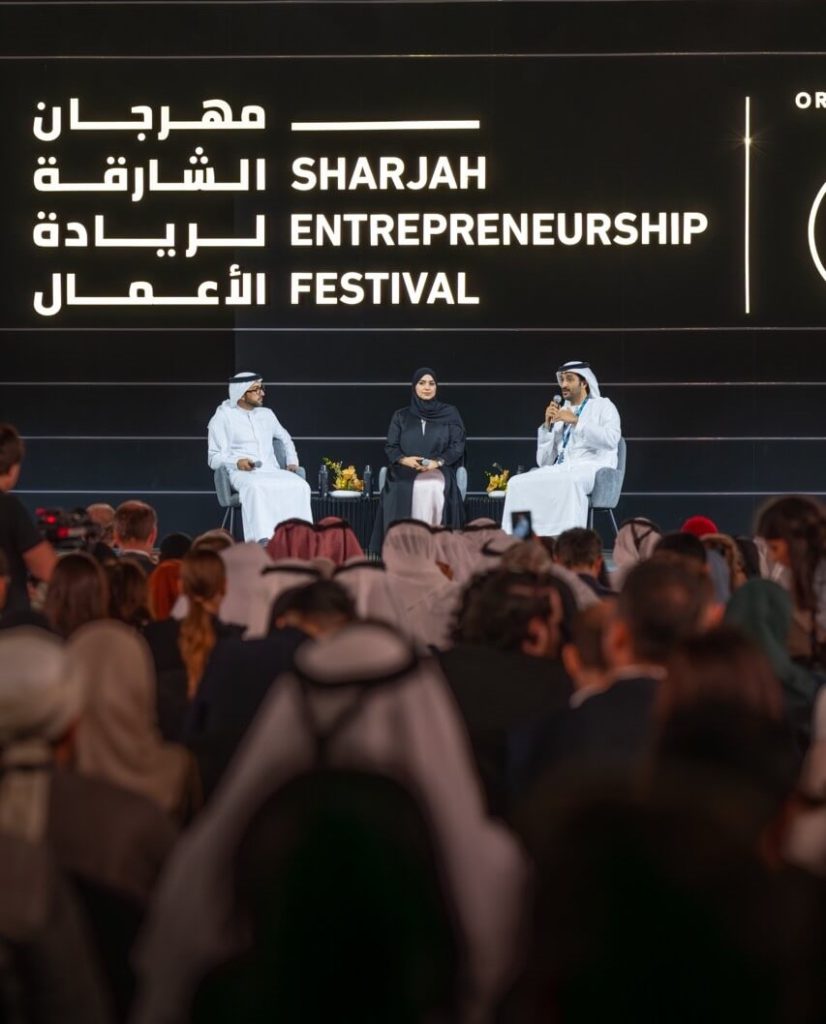
Meanwhile, Patrick Chalhoub highlighted the power of culture and authenticity. “A fundamental change we are seeing is that there are now entrepreneurs all over GCC, including across the emirates, who are really willing to create their own… fashion brands, luxury brands, who want to start up and who are very enthusiastic about it”.
“Nevertheless, this is not enough,” he said, adding, “A key challenge is cultural. Many entrepreneurs still seek validation for their creations from the international community, when in fact they should be drawing confidence from their own culture and convictions. Global fashion houses did not build their identity based on what the world expected of them; recognition came as a result of staying true to their vision. That same self-belief is essential here. Creativity requires patience and persistence, it cannot be rushed by market pressure or investor expectations. Some of the world’s most respected brands are nearly two centuries old; a reminder that building a creative legacy takes time, conviction, and the courage to grow at its own pace.”
Mounaz Abdel Raouf agreed on taking pride in one’s culture and building a brand, noting: “Balancing the identity of the modern Arab woman with our traditions and values was challenging at first. We were often advised to become more commercial and follow prevailing trends, and when we briefly did so, we lost what made us distinctive, our clients could no longer recognise us. That experience became a turning point. We realised that the more we stayed true to our cultural roots and creative identity, the more original and identifiable our brand became. In luxury, you don’t follow trends, you set them, drawing deeply from your own heritage, storytelling, and authenticity.”
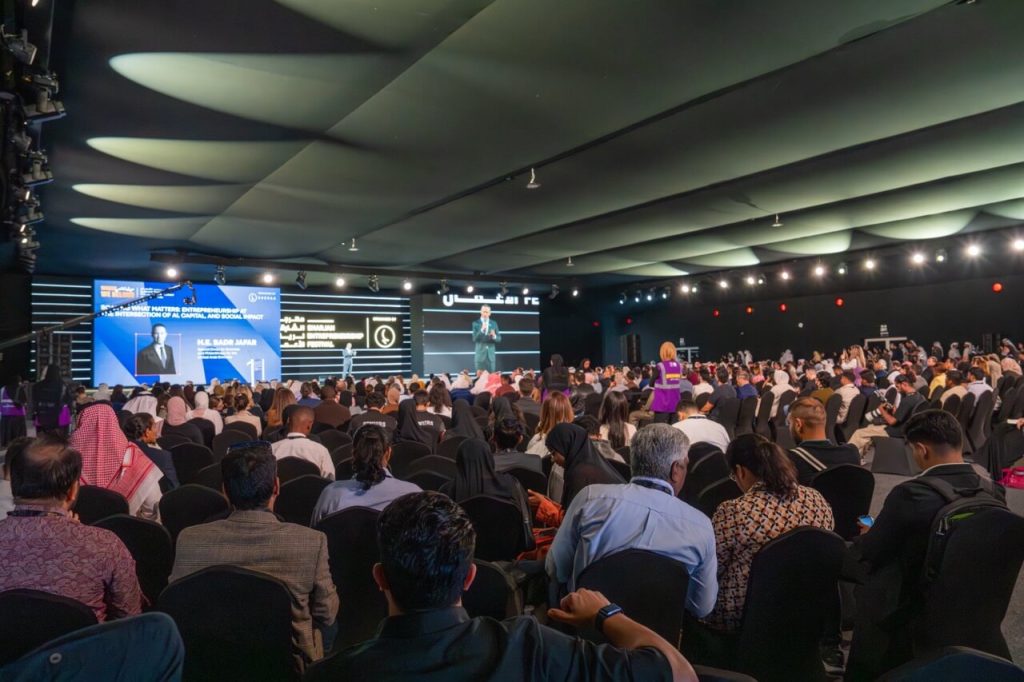
Entrepreneurship, AI, Capital, and Social Impact
In his address, H.E. Badr Jafar, Special Envoy for Business and Philanthropy for the UAE, talked about the impact of AI and how long-term growth depends on governance, institutional strength, and the support of durable systems for entrepreneurship.
“As AI reshapes economies at scale, the real question is no longer what can be built, but what can be delivered and sustained. The UAE’s experience demonstrates that when technology, capital, and philanthropic risk-taking are aligned, entrepreneurship becomes the mechanism through which solutions scale with measurable economic and social impact. This is how innovation moves beyond promise and begins to scale what truly matters,” he said.
Strategic Partnerships Announced
The Chairperson of Sheraa witnessed the signing of three MOUs at the ‘SEF Vault’ – a dedicated space created for global leaders, VIP guests, and speakers to connect and network.
The first, signed between Beeah Group and Sheraa announced the launch of a new intrapreneurship programme designed to enable employee-led innovation and venture building within Beeah. Key signatories included Khaled Al Huraimel, Group CEO and Vice Chairman of Beeah, and H.E. Sara Abdelaziz Al Nuaimi, CEO of Sheraa.
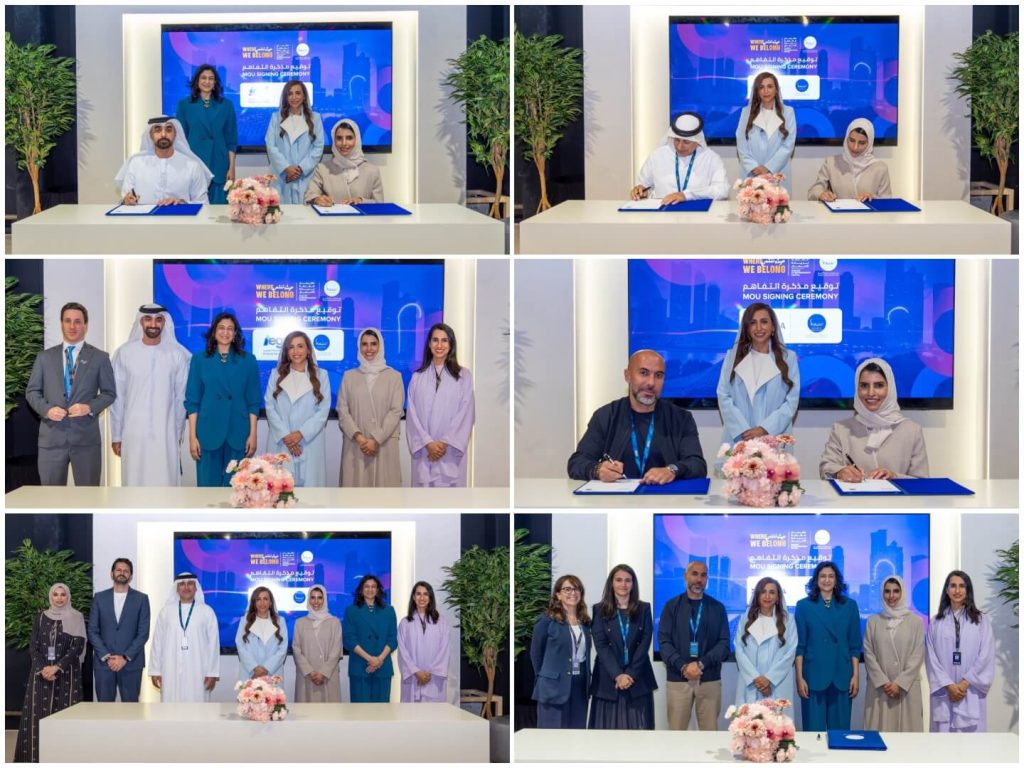
The second MoU signing was led by Arada and Sheraa, formalizing a three-year SEF legacy partnership, solidifying Arada’s long-term commitment to shaping and sustaining the future of entrepreneurship in Sharjah. Ahmed Alkhoshaibi, Group CEO of Arada signed the agreement on behalf of Arada while Sheraa was represented by its CEO H.E. Sara Abdelaziz Al Nuaimi.
A third MoU was signed by Emirates Growth Fund (EGF) and Sheraa, formalizing their collaboration to strengthen SME and start-up growth. The agreement was signed by Khalifa Al Hajeri, CEO of Emirates Growth Fund, and Sara Abdelaziz Al Nuaimi, CEO of Sheraa, and focuses on collaborative programs, ecosystem referrals, and the exchange of market and investment insights to support business expansion.
